
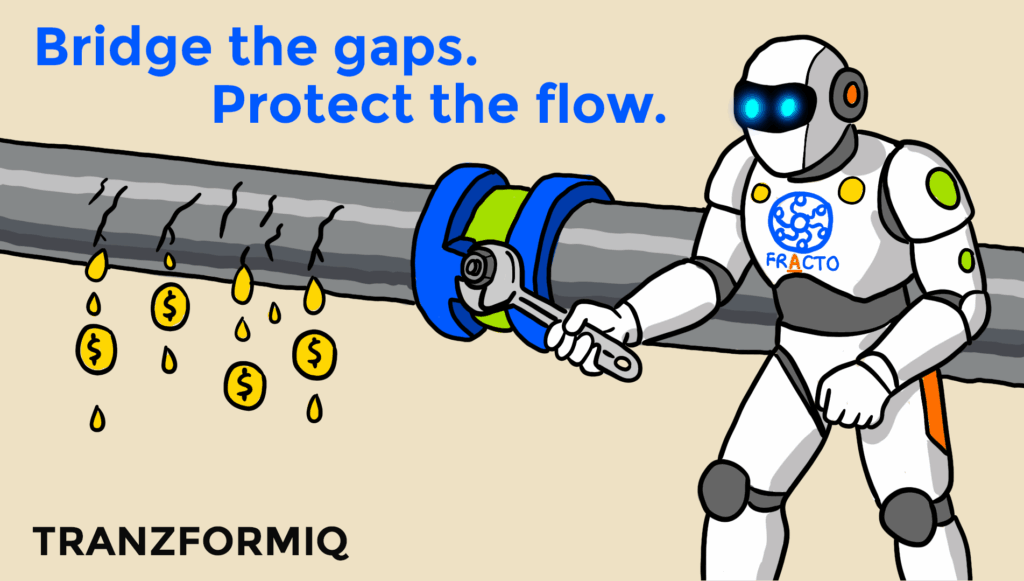
Revenue Bleeds at the Bedside: The Cost of Acuity Gaps
In the U.S., healthcare reimbursement is a tangled mix of payment structures. The majority of provider revenue still comes from fee-for-service (FFS), but a nearly equal share is now linked to value-based care models — such as capitation, bundled payments, and pay-for-performance. These categories overlap: a single hospital may bill under DRG-based FFS for one patient, a bundled payment for another, and a capitation arrangement for yet another. When the clinical picture, documentation, and the unique rules of each model aren’t in sync, revenue doesn’t vanish in one big hit — it quietly leaks away, encounter by encounter.
Beyond Denials: The True Cost of Acuity Gaps
An acuity gap occurs when the patient’s actual severity of illness and comorbidities aren’t fully reflected in documentation and coding — or when those details aren’t applied in the context of the correct reimbursement model. This isn’t just about claim denials. It’s about lost margin at scale:
- U.S. hospitals lose an estimated 4–5% of annual revenue due to preventable documentation, coding, and billing misses.
- These often show up as small, overlooked variances that accumulate to tens of millions of dollars in unrealized revenue per hospital.
- Studies in JAMA and reports from HFMA confirm that incomplete acuity capture and mismatched payment logic are leading drivers of this leakage.
How FRACTO™ Closes the Gap
FRACTO™ embeds intelligence at the point of care and documentation. It:
- Continuously compares clinical documentation, coding accuracy, and application of payer-specific rules and guidelines (rather than just generic 'logic').
- Leverages ML-powered contract learning and payer fee schedule intelligence.
- Flags misalignments before claims are submitted, enabling corrections that preserve revenue.
- Adapts seamlessly across DRG, FFS, and value-based environments, supporting payment assurance regardless of model.
Expanded Use Cases
- DRG Optimization – Ensures complete comorbidity capture for precise DRG assignment.
- FFS Accuracy – Identifies missed billable services or miscoding that directly impact reimbursement.
- Capitation & Value-Based Care – Validates risk adjustment factors, applies relevant quality metrics (e.g., Leapfrog), and supports care gap closure for fair compensation.
- Customization – Applies payer-specific rules and documentation requirements to ensure compliance and accurate payment across all models.
Bottom line: A basic CDI program isn’t enough. To protect margins, hospitals need CDI efforts informed by the reimbursement model in play — whether DRG, FFS, or value-based — and empowered by real-time intelligence. FRACTO™ makes that connection, turning clinical accuracy into financial assurance.

About R-IQ
R-IQ is an AI-powered revenue cycle platform that uses deep learning to predict denials, validate claims, and optimize billing workflows—before errors happen. It’s built to replace costly friction with real-time intelligence.
Join the Journey
Follow us and share your perspective. Each week, we’ll spotlight a key issue driving up collection costs—and how we can reverse the trend together.
Where are you seeing the Cost to Collect show up in your world? We’d love to hear how your team is navigating this challenge.